When the Bible says, “the two shall become one flesh” (Genesis 2:24; Matthew 19:4–6), it isn’t just about romance—it’s about covenant. If we’re one before God, then worship, work, and wallet go together. Money isn’t his or hers; it’s ours—and ultimately, God’s (Psalm 24:1).
I’ve seen this in my own home. Mia and I don’t always see money the same way. I lean frameworks and spreadsheets; she has sharp instincts for people and priorities. We’ve had our “budget bouts,” but God used our differences to make us a better team. Your strengths cover my weaknesses; my strengths protect your blind spots. That’s covenant.
Our mid-course correction (Matthew 6:33)
Halfway through our marriage, we made a decisive pivot: we would seek first God’s kingdom with our finances, our family goals and needs, and we would intentionally invest in memories. That meant re-writing the budget around giving, missions and ministry, simple living, and shared experiences with our kids. Some upgrades waited; generosity and discipleship couldn’t.
Now that we’re entering our senior years, we’ve doubled down on investing in memories—trips, meals, unhurried time—with our children and grandchildren, while still prioritizing the advance of God’s kingdom. We’ve learned this: experiences disciple hearts, and generosity anchors priorities. Money comes and goes; relationships and the gospel outlast us.
“Where your treasure is, there your heart will be also.” (Matthew 6:21)
The theology of “ours”
One-flesh means one-life—including money.
“They are no longer two but one flesh… what God has joined together, let not man separate.” (Matthew 19:6) Separate finances often create separate missions.
God owns; we manage.
“It is required of stewards that they be found faithful.” (1 Corinthians 4:2) Shift from “mine/yours” to “ours under God.”
Generosity leads the budget.
“On the first day of every week… put something aside.” (1 Corinthians 16:2) We give first, not last.
Five commitments for financial oneness
A) Radical transparency Full disclosure of income, debts, assets, subscriptions, and passwords. Set a decision threshold (e.g., “?5,000 and up, we talk first”).
B) One plan, two voices Use one master budget with two small discretionary envelopes (his/hers) so the plan is shared but personal dignity remains.
C) Roles by strength, not stereotype Who’s the CFO (pays bills, reconciles accounts)? Who’s the COO (calendar, renewals, documents)? Swap roles quarterly to learn.
D) Sinking funds beat surprise fights Fund tuition, car maintenance, gifts, travel, annual premiums monthly. Emergencies are for emergencies, not birthdays.
E) Unite against debt List debts; attack with debt snowball (smallest to largest). Freeze lifestyle, sell clutter, redirect windfalls. Celebrate every payoff.
A couple’s starter framework
Step 1 — Mission & values (30 mins): Example: “In five years, by God’s grace, we’ll be debt-free, have 6-month EF, give 10%+, and schedule family memory-makers each quarter.”
Step 2 — The “Ours Budget” (zero-based):
Give (tithe, missions).
Save (emergency + sinking funds).
Protect (HMO, Life Insurance, Non-Life Insurance).
Live (housing, food, transport, kids).
Enjoy (modest lifestyle + small personal envelopes).
Periodic Retreat: dreams, dates, and memory plans with kids/grandkids.
Conflict tools that keep you one
Pause–Pray–Plan: breathe, pray together, then decide.
24-Hour Rule: sleep on non-urgent purchases above your threshold.
Trade-offs, not tug-of-war: “Yes, if…” (Yes to this if we still hit the travel fund.)
Assume good intent: you married a partner, not a competitor.
Guardrails & red flags
Financial secrecy, deception, gambling, addiction, or abuse are breaches of covenant trust. Seek help—pastor, counselor, or licensed planner. Oneness isn’t enabling; it’s healing with truth.
Discipline breeds peace. “The plans of the diligent lead surely to abundance.” (Proverbs 21:5)
A prayer for couples
“Lord, You joined us as one. Teach us to handle Your money as one. Thank You for redirecting us to seek first Your kingdom. As we enjoy this season—children and grandchildren, shared meals and trips—keep our hearts generous and our home a channel of Your mission. Cleanse our motives, steady our hands, and help us invest in what lasts: Your Kingdom and the people You’ve entrusted to us. In Jesus’ name, amen.”
My 2 cents
You won’t get oneness from a perfect spreadsheet. You’ll get it from humility, shared purpose, and a plan you revisit together. Halfway through our marriage we pivoted to Kingdom-first and memory-rich living—and it changed our budget, our family culture, and our joy. As we step into our senior years, we’re still doing two things: advancing God’s Kingdom and making memories with the people we love.
When our wallets submit to the same King, HIS + HERS becomes OURS—and ours becomes His.
Faithful Stewardship and the Leftovers of a Miracle
By Randell Tiongson on August 1st, 2025
When we think about miracles in Scripture, we usually focus on the big, dramatic moments—the headline moments. Water into wine. Blind eyes opened. Storms calmed. But in John 6, Jesus performs one of His most famous miracles: feeding five thousand men (not counting women and children) with only five loaves and two fish.
But here’s something we often overlook. After the people were fed and satisfied, Jesus gives a specific command to His disciples:
“And when they had eaten their fill, he told his disciples, ‘Gather up the leftover fragments, that nothing may be lost.’” — John 6:12, ESV
That one sentence says a lot about how Jesus views resources, stewardship, and waste—even after a supernatural act of abundance.
What’s going on in John 6:12?
After performing the miracle, Jesus doesn’t say, “Leave the leftovers; we’ve got plenty more where that came from.” Instead, He commands His disciples to gather the remaining pieces—emphasizing, “that nothing may be lost.”
This statement reveals two key things:
Jesus acknowledges the value of the excess. Just because it came from a miracle doesn’t make it disposable. Every piece mattered.
There is divine intentionality in preservation. The word “lost” here is the same Greek root (apollymi) used in other passages referring to perishing or destruction. Jesus didn’t just want to prevent physical food from being wasted—He was teaching a principle: even abundance must be handled with accountability.
How does this apply to us today?
This text isn’t merely about bread and fish. It’s about how we handle blessing. In the Philippines, where we often oscillate between seasons of lack and seasons of plenty, we are tempted to either panic in need or splurge in abundance. But Scripture teaches a better way:
“The plans of the diligent lead surely to abundance, but everyone who is hasty comes only to poverty.” — Proverbs 21:5, ESV
Diligence, planning, and intentional stewardship lead to sustained provision. But the hasty—the impulsive, the wasteful—will find themselves wanting. It’s not just how much you have, but how faithfully you manage what you have.
Jesus is showing us this exact principle in John 6:12. His disciples didn’t produce the bread, He did. But He still made them gather the leftovers. Why? Because stewardship isn’t about the source—it’s about the response.
What does this mean for our financial lives?
Let me say it plainly: Miracles are not an excuse for wastefulness.
I’ve met people who treat bonuses, commissions, or windfalls like they’re supernatural licenses to spend without thinking. “Eh, I can afford it,” they say. But here’s the truth I’ve learned from years of walking with people through their financial journeys:
Just because you can afford it doesn’t mean you should spend on it.
Faithful stewardship means we view every peso as part of God’s provision, whether it came from hard work or unexpected blessing. And faithful stewardship reflects Kingdom responsibility.
Practical Takeaways for Wise Stewardship
1. Count your leftovers.
After the miracle, Jesus didn’t just move on. He stopped, reflected, and gathered what was left. In our context, this means:
Track your spending.
Review where your money goes.
Be mindful of subscriptions, food waste, and impulse buys.
2. Plan with purpose.
Don’t confuse blessing with permission to live beyond your means.
Budget your income and stick to it.
Save with intention. Invest with wisdom.
Plan for emergencies and retirement—not just the next vacation.
3. Avoid financial carelessness.
Jesus didn’t tolerate waste even in abundance. We shouldn’t either.
Say “no” to unnecessary upgrades just because your income increased.
Think long-term, not short-term gratification.
Delay indulgence; pursue stewardship.
4. Be accountable.
Involve your spouse, family, or financial mentor in your money journey.
Are you spending wisely?
Are you giving generously?
Are you honoring God with your resources?
Stewardship Is Spiritual
We often think that stewardship is just a financial discipline. But it’s more than that—it’s a heart posture before God.
Remember, in Luke 16:10 Jesus said:
“One who is faithful in a very little is also faithful in much…”
If you’re not managing your P5,000 well, don’t expect to manage P50,000 or P500,000 with excellence. The test of faithfulness starts in the small things—in the fragments, in the “leftovers.”
Brotherly Advice
Stewardship is not just about restraint—it’s about worship. When we manage our money wisely, we honor the One who gave it. We declare, “Lord, I trust You not only to provide, but also to guide how I use what You’ve provided.”
So next time you receive a blessing—whether big or small—don’t just celebrate the miracle. Count the fragments. Gather the leftovers. Honor the Source.
Because every peso counts when it comes from the hand of the Master.
*This blog is inspired from the lessons I learned from Pastor Paolo Punzalan
Why Oversimplifying Personal Finance Is a Bad Idea
By Randell Tiongson on June 23rd, 2025
In today’s social media-driven world, financial advice often gets reduced to catchy one-liners: “Just invest.” “Just buy insurance.” “Just stop spending on coffee.” “Just follow this budgeting app.”
It sounds good, but here’s the problem: Oversimplifying personal finance is not just unhelpful—it can be harmful.
Over the years, I’ve taught countless seminars, walked with families through financial crises, mentored OFWs, and equipped young professionals. If there’s one thing I’ve learned, it’s this:
Personal finance is not about shortcuts. It’s about stewardship.
Personal Finance is a Process, Not a One-Liner
That’s why I created my No Nonsense Personal Finance framework—not to make things complicated, but to make them intentional.
Here’s the step-by-step structure I teach:
Understand your cash flow
Manage your debt wisely
Build your emergency fund
Get insurance
Invest for your future
Plan your estate (a newly added sixth step in my 2025 edition)
Each step serves a distinct purpose. Skipping ahead may feel efficient, but in reality, it exposes gaps that can cause major setbacks. For instance, you can’t invest wisely if you’re buried in unmanageable debt or don’t have an emergency fund.
Personal finance isn’t about getting rich quick. It’s about building strong foundations and being faithful with what we’ve been given. Remember, we build wealth one peso at a time.
Most Financial Mistakes Are Behavioral, Not Mathematical
Let’s be honest—most money problems aren’t due to a lack of technical knowledge. They’re rooted in behavior.
We procrastinate. We give in to lifestyle pressure. We panic during market dips. We chase trends instead of pursuing truth.
This is where behavioral finance plays a huge role. The way we think about money—our emotions, biases, and habits—shapes our outcomes far more than formulas or tools.
“The plans of the diligent lead surely to abundance, but everyone who is hasty comes only to poverty.” — Proverbs 21:5 (ESV)
It takes discipline and wisdom to stay the course. And oversimplified advice doesn’t shape behavior—it only masks deeper issues.
Understanding Financial Instruments Matter
Here’s another risk of oversimplification: people invest in what they don’t fully understand.
I’ve seen too many Filipinos buy products they barely grasp—from variable life policies to high-risk stocks, NFTs, or “guaranteed” crypto yields. Oversimplified marketing leads to underinformed decisions.
Understanding how financial instruments, markets, and economics work is essential to long-term success and protection. We don’t need everyone to become economists—but we do need financial literacy rooted in reality, not hype.
Personal Finance is a Form of Stewardship
For me, personal finance isn’t just a technical discipline—it’s a spiritual one.
As stewards, we are not owners. We manage what has been entrusted to us.
“Moreover, it is required of stewards that they be found faithful.” — 1 Corinthians 4:2 (ESV)
That means:
Being diligent in the small things
Avoiding get-rich-quick thinking
Planning wisely, living humbly
Using our resources to bless others and advance good
Oversimplification short-circuits stewardship. It makes us passive instead of purposeful.
My Thoughts
We don’t need more viral advice. We need more faithful action. We need more wise, long-term thinking. We need more disciplined stewardship.
If you want to take control of your financial life, don’t settle for gimmicks. Embrace the process. Learn. Ask questions. Walk step-by-step.
Because your financial life is too important to leave to chance—or trends.
Let’s do it the no-nonsense way. Let’s do it the wise way.
Want to learn how to manage your finances better?
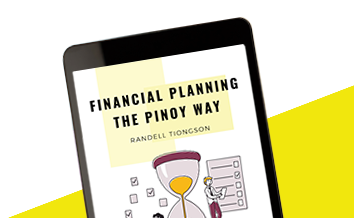
Register now and get a free copy of my e-book. Start your financial planning journey today!